

The REAL Story behind Werewolf Folklore - History & Origin
Werewolf Folklore
Werewolves have been around long before the days of modern horror flicks. Their earliest role in history will surprise you.
© Buzzy Multimedia
by Matt Walker
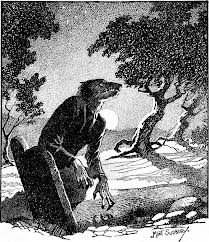 You know what a werewolf is. Everyone does. The academic word for werewolf is “Lycanthrope“. A Greek word because Greek - even before Latin - was the language of scholars.
The word we common folk use is werewolf. Part modern English, part archaic Old English and elements of the Germanic tongue all form the base of the language in which these words are written. It is from the regions where this language evolved and was spoken that the bulk of our modern werewolf mythos comes, and it is there that we can gain some understanding of the subject.
The exact etymology of the word is not agreed upon, but the various theories are all related. Three different terms from which it could be derived are the Old English terms wearg-wulf, wer-wulf, or weri-wulf. Wer-wulf simply translates as “man wolf” (The Old Norse word for the same thing was verulfr) and is the most generally accepted origin. However, both wearg and weri hold potential.

Fenrir was documented by historian, poet, and politician, Snorri Sturluson in two 13th century collections of Icelandic mythology. Poetic Edda and Prose Edda recall Fenrir being locked away when the Gods received word of prophecies citing his eminent danger. Though incarcerated, it is said that Fenrir was still able to bite off the right hand of the God Týr.
The Old English wearg (or “warg“) and its counterpart in Old Norse (vargr) are thought to stem from an older Proto-Germanic root word that meant “strangler” and referred to the vilest of criminals, an accursed person. It was used to describe Fenrir and his two sons, the ravenous wolves who chase the sun and moon across the sky.
In more mundane terms it was also the word for a specific kind of wolf, a rogue animal which preyed on livestock and killed far more than it could eat. It seemed to have sheer blood lust - which is a real phenomenon, usually involving a lone wolf too old (or wounded) to effectively hunt more challenging game. This image of horrific slaughter led to many allusions to wolves in warfare; for instance, the 8th century Anglo Saxon poem “The Battle of Maldon” refers to Viking raiders as waelwulf; “slaughter-wolves.”
“Weri” in Old English means “to wear,” in which case the term could refer to a man wearing a wolf pelt. Both of these - wearg meaning “outlaw” and the weri meaning “one wearing a wolf skin” - could be in reference to the fierce Ulfhednar of the Norse sagas. Roughly translated as “wolf coats” the Ulfhednar were identical to the better known Berserkers (Old Norse; Bear Shirt) except that rather than a bear skin, they wore the pelt of a wolf.

The Vatnsdœla Saga, an Icelandic family chronicle, describes Berserkers as especially enraged warriors that wore wolf pelts, bit their shields, and were not effected by fire or iron in battles.
Both Berserkers and Ulfhednar appear to have been part of a warrior cult, descended from much earlier animal cults that revolved around hunting rituals. These later cultic warriors were focused on the ability to alter consciousness called the berserkergang - appearing in lore as a state of possession by the spirit of a vicious, predatory animal. In this overwhelming, mindless rage they knew only blood lust without fear or pain. The manner in which they attained this condition varies with sources. Theories range from heavy drinking rituals to mushrooms or other psychotropic.
Period accounts attest that these warriors would assemble on the battlefield, chewing on their shields as they growled and shuffled, stomping their feet. In the grip of the berserkergang the howling, snarling Ulfhednar performed feats of strength and ferocity that became legend, often continuing in battle even after having receiving mortal wounds.
Some tales say they were impervious to weapons, others that they sometimes dropped their own weapons to attack their enemies with bare hands and teeth… and even, in some cases, physically transform into wolves.
Described almost universally as savage barbarians who killed indiscriminately, these men wearing wolf skins were outlawed in 1015 AD.
The image of the wolf as a killer and the exploitation of that image over time led to a fear and hatred so thoroughly established in the European populace that the wolf was in some cases driven to extinction. Murderers and villains of all stripes were likened to wolves. The word for “outlaw” became synonymous with “wolf”.
Considering this usage, it may be that many earlier references to “werewolves” were not literal in their meaning. Imagine for a moment the villain of “Little Red Riding Hood” as an allegorical representation of a human serial killer - an allegory from a time centuries before the terms serial killer or psychopath were first uttered.
Many other tales of shape shifting throughout Europe depict enchanted wolf skins which transform their wearer, most notably those from Ireland where other creatures such as the Selkie accomplish similar transformations in like manner.
While perhaps not all of these older tales of wolf men preclude the idea of benign or ambivalent werewolves, the overwhelming use of the wolf to symbolize ferocity and bloodthirsty slaughter was fertile ground for the idea in later ages of the werewolf as a terrible monster. The universally supernatural nature of such transformations in lore (the idea of lycanthropy as a kind of contagion only seems to have cropped up in the early 20th century) just cemented the idea, as the Christian viewpoint was that “magic” in any form was a product of the Devil.
After the conversion of Europe to Christianity, old tales were viewed through a different lens. It is this later lore, recorded by Christian chroniclers (particularly during the inquisition and various periods when witch trials were prominent) that has been passed down to us through the ages and has provided the framework for modern pop culture treatments of lycanthropy.
In medieval Christian Europe the werewolf was regarded as unmistakably evil. A marauding beast in the service of the devil, with no other purpose than to sow terror and revel in the slaughter of the innocent.

Heinrich Kramer was a Catholic clergyman banned from Innsbruck, Germany by a Bishop for his belief in witchcraft. In 1486, he wrote Malleus Maleficarum in efforts to prove that witches do exist. Rejected by the church at the time of publication, the essay was later used in the 16th and 17th century as a guide for the ruthless denunciation of witchcraft.
Intermittently throughout Europe in the middle ages there appear to have been werewolf epidemics. In the 16th century France alone produced something in the neighborhood of 30,000 recorded werewolf trials, with England and Germany having perhaps fewer but arguably more sensational records. So prevalent was the hysteria that Werewolves were a hot topic among secular and clerical scholars alike, and duly noted in the premier witch hunting manual of the Inquisition; the Malleus Maleficarum (The Witch Hammer).
Though some cases were thought to be that of unfortunate souls suffering from a magical curse against them by a witch or devil, it was still thought possible for a werewolf’s transformation to be an act of free will.
The willing werewolf was viewed more or less as the male counterpart to the archetypal witch, and the prevailing wisdom was that such persons could and did attain the power to assume their terrible form by means of sorcery or a satanic pact. These methods ranged from salves and potions to wolf skins or other items of clothing, such as the magical belt which “the Werewolf of Bedburg” Peter Stumpp reportedly received from the devil himself. Put to the rack in 1589, he confessed to having worshiped the devil since he was 12 years old, that the belt allowed him to transform into a massive, demonic wolf with eyes that “in the night sparkled like fire” - and that in that monstrous form he had killed and eaten fourteen children and two pregnant women.
For much of this period there was significant debate about the true nature of werewolves. Whether they actually physically transformed into monstrous creatures or the transformation occurred only in their own minds. Even if the transformation were not actually physical, who was to say the difference between a madman and a sane man deceived by hellish glamour?
For a time the literal view of physical transformation that reigned among uneducated peasants was entertained even among the clergy and noble classes. Eventually that notion fell out of favor and was replaced by the earliest conception of the werewolf as not some sort of twisted, supernatural hybrid of man and wolf but a wholly human madman. One capable of mind-bogglingly heinous acts or murder and even cannibalism. By examining these origins we can see how this early terror of werewolves creates a fertile ground for modern horror writers to spin their own tales.
© Buzzy Multimedia - Sci-Fi and Fantasy Audiobooks & Funny T-Shirts
by Matt Walker

Matthew Walker
Latest posts by Matthew Walker (see all)
- The Warded Man by Peter V. Brett - 04/30/2009
- Welcome To The Jungle by Jim Butcher - 04/21/2009
- White Witch, Black Curse by Kim Harrison - 03/26/2009
- Hunters Moon by David Devereux - Book Review - 03/12/2009


-
Peter
-
http://auriette.blogspot.com Auriette
-
June K. Williams
-
June K. Williams
-
Kt
-
Matt
-
e_the_g
-
Lomax Lamax
-
http://sawiggins.wordpress.org Steve Wiggins
-
elaine
-
Matt J. Kruse
-
Matt J. Kruse
-
http://naturalbear.deviantart.com Ike